

Five Years after “FutureFiction” – Let's Take You back to the Future
What might a future world look like in which the climate crisis has been stopped? In 2021, young authors asked themselves exactly this question as part of our short story contest “FutureFiction – Stories for the Future”. We wanted to think positively about visions of the future together with you, and at the time we were delighted by the tremendous response and numerous inspiring submissions.
Today, five years later, it’s worth taking a look back. We wondered what had become of the winners of the creative contest and their visions of the future, and we were able to bring two of them on board for this retrospective.
Two Visions of a Sustainable World
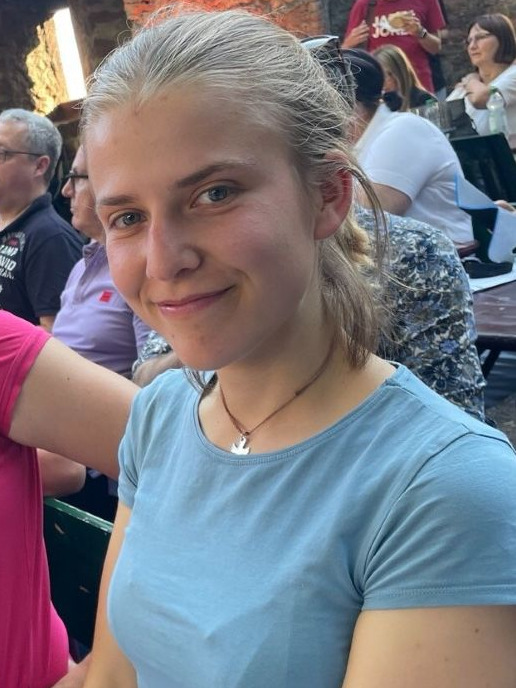
At the time, Pia Marie Hegmann submitted her “FutureFiction” story titled "Utopie aus drei Perspektiven" [“Utopia from Three Perspectives”]. In it, she describes what everyday life might look like for different people in such a positive future. She lends her vision a unique sense of humor by also narrating the view of a frustrated climate change denier.
At first, Pia had a hard time finding a hook for a story that was entirely positive. “I then thought it would be funny to adopt the perspective of a character for whom not everything is going well — and to poke a little fun at the kind of complaining that’s just for the sake of it,” she says today about her story and the “little nod to a certain German politician.”
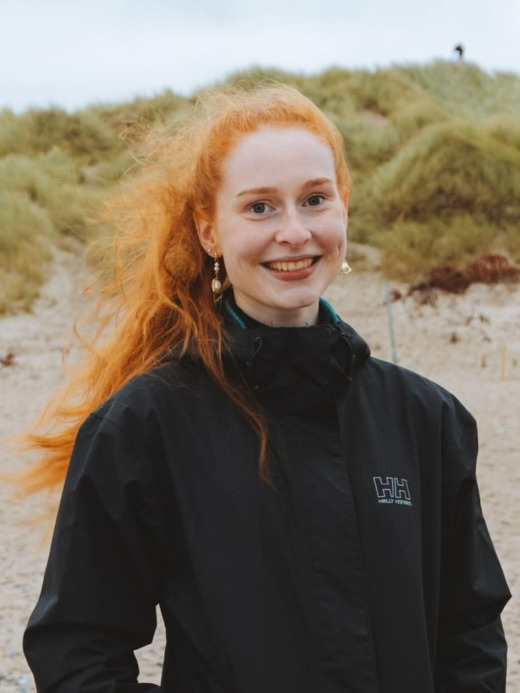
Kajsa Wysujack’s story "Maigeschenk" [“A Gift of May”] actually managed to function entirely without a narrative problem: It describes a visit to a market in early summer of a utopian future, focusing on the narrator’s sensory and aesthetic perceptions. For a moment, you lose yourself in the fragrant, radiant, and vibrant Lüneburg of her vision of the future. Kajsa was living there at the time of the contest, and the city — which she perceives as “very progressive and forward-looking” — inspired her story. Lüneburg showed her back then “that transformation doesn’t have to be a forceful process, but can positively change the realities of life in an inclusive and gentle way.”
Never Lost Sight of the Utopia
Pia recalls that, after spending so much time focusing on positive visions of the future, she initially felt almost “a little too relaxed” — until reality caught up with her again in the form of new dystopian news. That’s when it helped her to keep those utopian visions in mind. “Now it’s easier for me to think not only about future disasters, but also about what could go well and how it all might come together.”
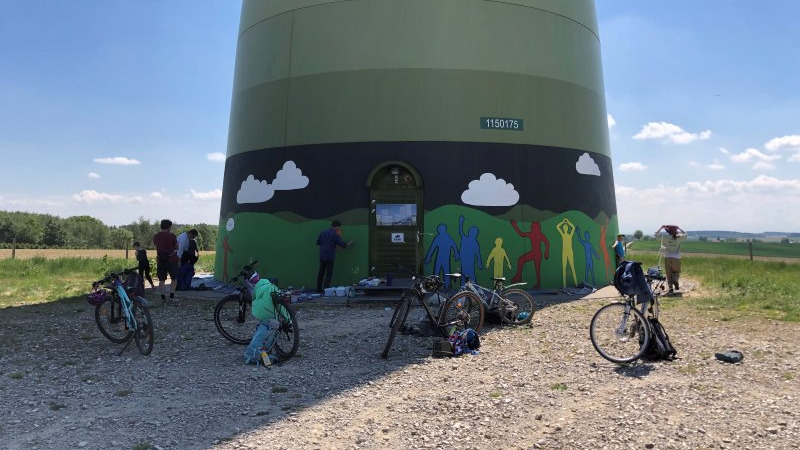
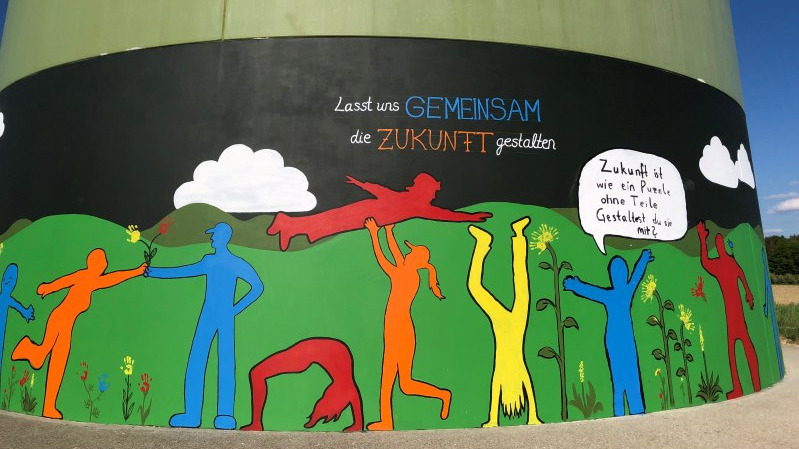
Her own activism has also changed since then. She was active with Fridays for Future for several years. Today, she focuses more on personal interactions with people and concrete solutions. This is currently taking a very practical form in an unusual project: Together with friends and a community energy cooperative, she’s artistically redesigning the base of a wind turbine. A site that was once controversial is set to become a monument that fosters a sense of identity. “By the way, we’re also writing very short utopian texts on it,” she says with a laugh.
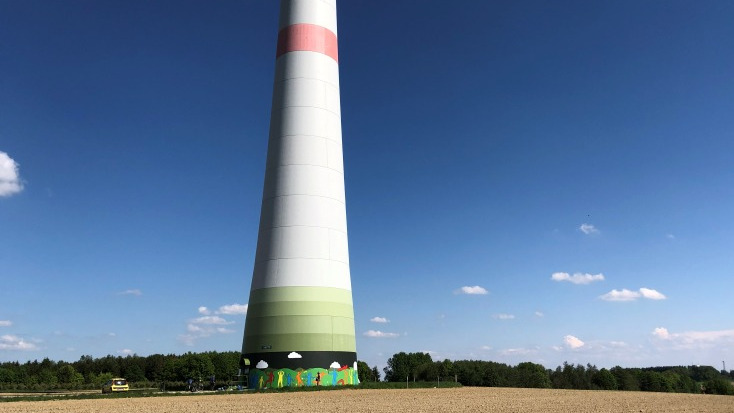
Pia remains an optimistic person to this day, yet she also recognizes the challenges of our time, pointing to setbacks in climate policy and debates over fossil fuels. But she also sees a glimmer of hope in this: technologically speaking, the Energy Transition has long been possible in many places; often, it is a lack of political will rather than feasibility that stands in the way.
She sees future difficulties primarily in the changes to everyday life. Rising food prices, a climate that is becoming increasingly hostile to life, and associated problems such as new diseases. “But I still believe,” Pia adds, “that we will be able to achieve at least part of this utopia through implementation.”
Between Feelings of Happiness and Political Realism
Kajsa Wysujack is pleased to see that the social transformation is already happening in areas like agriculture, animal welfare, and sustainability. However, she frames her fundamentally positive stance in realistic and pragmatic terms: “Key levers for sustainable food systems are and will remain national and transnational governance mechanisms, which depend on political will. In light of the rising popularity of authoritarianism and a profound societal militarization, it would be illusory to believe, under these circumstances, that issues of sustainability can hold their ground on the agenda against emotionally charged security discourses.”
Kajsa remains convinced to this day that “narrative techniques and art-based approaches are essential as an affective force for sustainability and collective utopian thinking” — and this interest in a positive future is evident not least in her professional career. She has recently begun a master’s program in Peace and Conflict Studies and works as a student assistant at the “PEASEC” Chair for Peace Informatics at TU Darmstadt.
In her personal life, Kajsa is currently interested in “True Cost Accounting”: making hidden costs in food production (and, beyond that, in human activity in general) visible. For anyone who wants to get to the bottom of what their diet really costs, she recommends the website of the EU network “True Cost Alliance,” which facilitates dialogue between academia, practitioners, and the public.
Why We Still Need Utopias
Five years after the FutureFiction competition, it’s clear that the texts from that time were more than just snapshots. They sparked new ways of thinking, opened up new perspectives, and continue to have an impact to this day. Perhaps this is precisely where the great strength of utopias lies: they are not finished blueprints, but spaces for thought. They allow us to explore possibilities without ignoring reality.
The questions raised by FutureFiction are more relevant than ever. The climate crisis, social change, political challenges—all of these continue to call for new ideas and narratives. The future needs stories. And people who are willing to tell them.